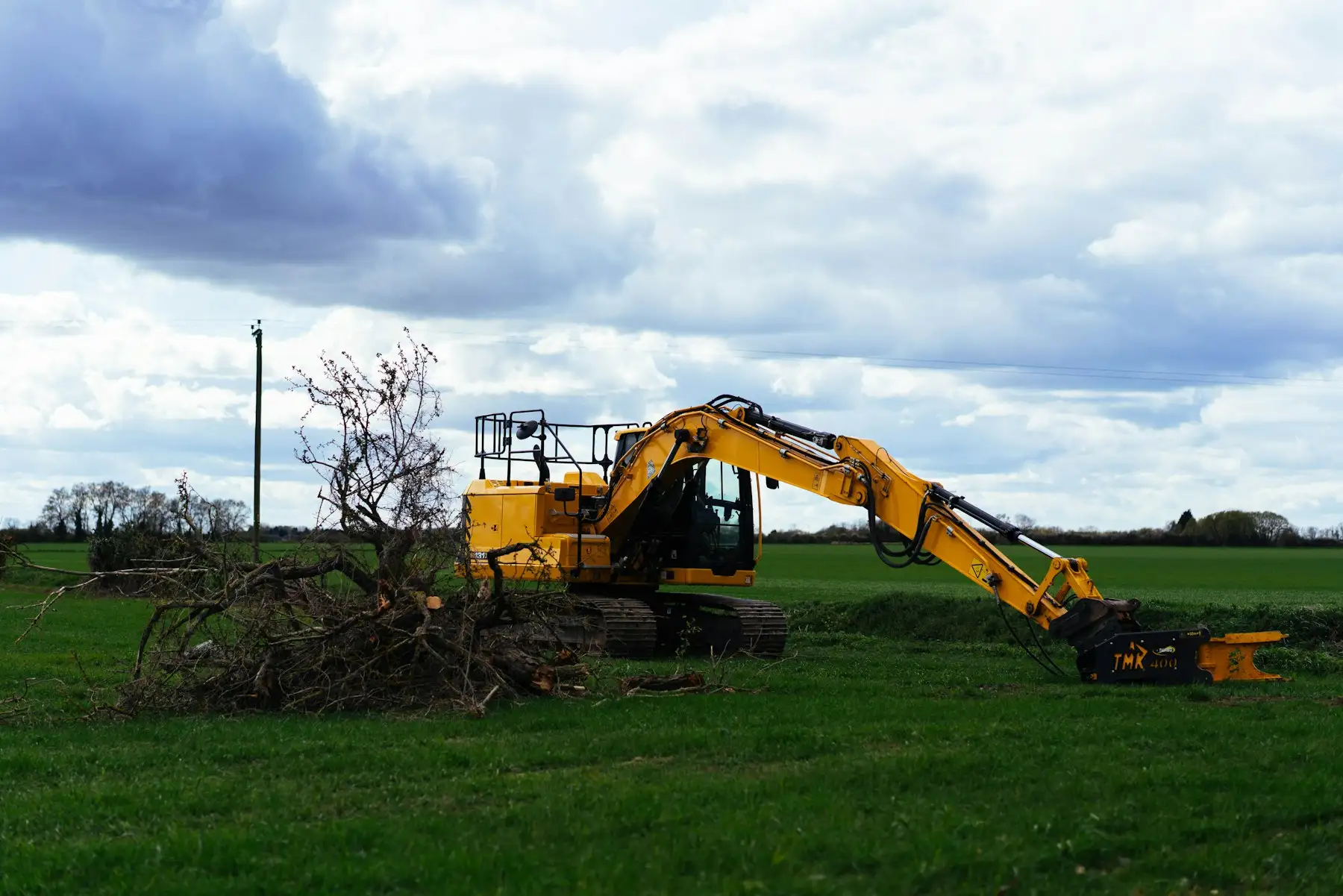
Brush Clearing in Augusta, GA
Bush hogging and underbrush removal across the CSRA. Overgrown fields, fence lines, trails, and pasture cut back without taking out the trees you want.
Call (706) 555-0134Free quotes. Serving Augusta, GA and the CSRA.
Get a Free Quote
Tell us where the lot is and what is on it. Usually a same-day reply.
Rather talk it through? Call (706) 555-0134
Got it. We will be in touch.
Your details came through. We usually reply the same day, and the next morning if it is late.
Need it sooner? Call (706) 555-0134
Brush Clearing and Bush Hogging
Brush clearing is the middle ground. You are not clearing the land, you are taking the junk out of it: the grass, briars, privet, saplings, and vines that fill every open space in this part of Georgia if you look away for a season. The trees you like stay. The mess goes. Around Augusta this is the most common call we get, because the growing season is long and a field cut two years ago is not a field anymore.
Two machines do this work and picking the right one is most of the job. A rotary cutter, a bush hog, behind a tractor is the fast, cheap answer for open ground with grass and light woody stems. A forestry mulcher is what you need once the field has gone past that, into stems too thick for a cutter to handle without breaking something. We will tell you which your ground needs, and if it is the cheaper one, we will say so.
What's Included
- Bush hogging open fields, pasture, and rough ground
- Underbrush removal under an existing tree canopy, leaving the trees
- Fence line clearing so you can see and fix the fence
- Briars, blackberry, privet, and vine tangles cut back
- Trails, food plots, and shooting lanes opened up
- Ditch banks and pond edges cut where the ground allows
Ready for a number? Tell us the acreage and how long it has been since it was cut. That is usually enough.
Call (706) 555-0134When You Need Brush Clearing
- Overgrown acreage. Land you cannot walk, but that does not need clearing. Just cutting.
- Pasture reclamation. Old pasture going back to woods. Cut it now and you keep a pasture. Wait three more years and you have a mulching job.
- Preparing land for sale. A buyer walking a cut field sees the land. A buyer facing a briar wall sees a problem.
- Hunting land. Lanes, plots, and access, cut on a schedule rather than cleared once.
- Fence work. You cannot fix what you cannot reach, and nothing eats a fence line like privet and wisteria.
- Code and neighbors. Vacant lots in Richmond County are subject to nuisance rules on overgrown vegetation, and a cut lot stops the letters.
Our Process
Look at what is standing
Stem size decides the machine. We check for stumps, rock, wire, and old fence posts hiding in the grass, because those are what break a cutter.
Cut it
We work the field in passes at the height you want. Higher if it is pasture you want to come back fast, lower if you want it to look mowed.
Edges and walk-through
Fence lines, ditch banks, and corners get cleaned up last, then we walk it with you before the trailer loads.
What Grows Back Here, and How Fast
Brush clearing here is a maintenance job, not a one-time job, and anybody who says otherwise is selling something. Our growing season runs from March into October, with the heat and afternoon storms that make Augusta summers what they are. That is why a field cut clean in June looks rough by September. Chinese privet is the worst of it along the creek bottoms, because it resprouts from the crown and birds spread the seed everywhere. Kudzu and wisteria come back from runners no matter how clean the cut. Sweetgum and loblolly seed into open ground within a year or two. Cut a field on a schedule and it stays a field. Cut it once and walk away and you bought yourself a mulching job in three years.
Hidden hazards are the other local thing worth knowing. A lot of ground in Richmond County was something else before it was your field: pasture, timber, or a homesite that burned or got pushed. Under the grass is old fence wire, T-posts, fieldstone, buried tires, and stumps from a clearing job nobody finished. A rotary cutter finds all of it at speed. On a field that has not been cut in years we go slower on the first pass, and that is priced in. It is cheaper than a gearbox. Wet ground matters too: pond edges, ditch banks, and low corners stay soft for days after a storm on clay, and we would rather cut those dry than leave ruts in your field.
Related Services and Areas
If the field has gone past cutting into a thicket, forestry mulching is the next step up. If there are stumps in the field that keep catching the cutter, get them out with stump removal. We bush hog throughout the CSRA, including Aiken, where the pasture and horse property work is, and Evans. For a number on your field, call. The quote is free.
Brush Clearing FAQ
What does brush hogging cost per acre around Augusta?
Bush hogging open ground with grass and light brush is the cheapest work we do, and small jobs carry a minimum charge because the trip and the trailer cost the same either way. Rough ground with heavy stems, hidden stumps, or steep slope costs more, and a field thick enough to need a mulcher instead of a rotary cutter prices closer to mulching. Tell us the acreage and how long since it was cut and you get a number on the call, free.
What is the difference between bush hogging and forestry mulching?
A bush hog is a rotary cutter pulled behind a tractor. It mows grass, weeds, and light woody stems, generally up to about an inch or two, and it leaves the cuttings lying in a mat. It is fast and cheap on open ground. A forestry mulcher is a different machine that grinds standing brush and trees up to eight or ten inches into chips. If you can still drive a tractor across it, you want bush hogging. If it has grown into a thicket you cannot walk through, you want mulching.
How often should a field be bush hogged in Georgia?
Two or three times a season keeps a field open here, usually once in late spring, once mid summer, and once in early fall. Our growing season is long and wet enough that a field cut once a year will still be putting up sweetgum and pine seedlings by the following spring. If a field has gone more than two or three years, a rotary cutter is not going to handle it and the first pass needs a mulcher.
Get a Brush Clearing Quote
Tell us the acreage, how long it has been since it was cut, and whether there are stumps or wire in it. We will tell you what it takes.