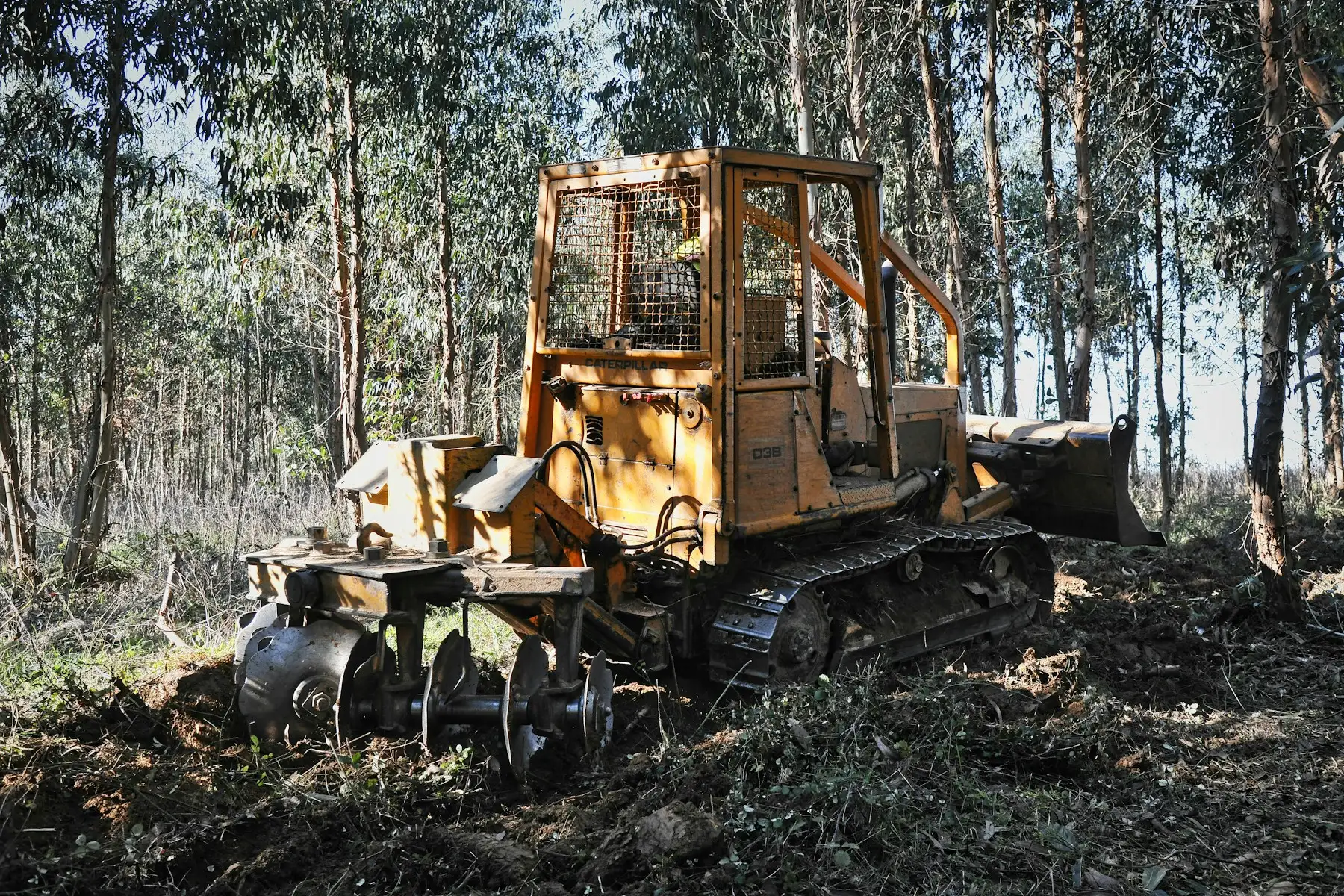
Forestry Mulching in Augusta, GA
One machine grinds standing brush and small trees into mulch that stays on your ground. No burn pile, no dump runs, no torn-up topsoil.
Call (706) 555-0134Free quotes. Serving Augusta, GA and the CSRA.
Get a Free Quote
Tell us where the lot is and what is on it. Usually a same-day reply.
Rather talk it through? Call (706) 555-0134
Got it. We will be in touch.
Your details came through. We usually reply the same day, and the next morning if it is late.
Need it sooner? Call (706) 555-0134
What Forestry Mulching Is
Forestry mulching is clearing with a single machine. A tracked carrier runs a drum mulcher on the front, and that drum grinds standing brush, vines, and small trees into chips right where they stand. The chips stay put as a mulch layer. Nothing gets piled, nothing gets burned, nothing leaves on a truck. That is why mulching is usually the cheapest way to take back overgrown land around Augusta.
It suits a specific job. If you have an acre or ten of understory, privet, sweetgum saplings, greenbrier, young pine, and you want to see your ground again, mulching does it in a day or two. If you need bare dirt under a slab, it does not, and you want full lot clearing instead. Mulching gets you usable, walkable, mowable land. It does not get you a construction pad.
What's Included
- Grinding of standing brush, vines, and saplings across the marked area
- Trees generally up to eight to ten inches at the base, mulched in place
- Chips spread over the work area rather than piled
- Keeper trees left standing where you mark them
- Fence lines, trails, and property lines opened up on request
- No burning, no hauling, and no dump fees on your invoice
Two things are not included. Stumps stay in the ground, ground flush but still there with the root ball intact. And the mulch layer stays. If either is a problem for what you plan next, say so on the call.
Ready for a number? Tell us the acreage and what is growing on it. You get a range on the call.
Call (706) 555-0134When You Need Forestry Mulching
Mulching is the right tool more often than people expect. The usual reasons:
- Overgrown acreage. Land you cannot walk. Three or four seasons of Georgia growing weather does that. Mulching gives it back in a day.
- Preparing land for sale. Nobody buys what they cannot see. Mulched ground shows the contours, the good trees, and the real boundaries.
- Hunting land. Shooting lanes, food plot prep, and access trails, without the erosion you get from a dozer.
- Pasture reclamation. Old pasture gone to sweetgum and privet comes back with a mulching pass, then seed.
- Building a home. Mulch the whole tract so you can see it, then fully clear only the building footprint. Cheaper than clearing everything.
- Storm damage. A tangle of downed limbs and leaners grinds up faster than it stacks.
Our Process
Walk the ground
We look at stem density, tree size, slope, and wet spots, and you mark anything that stays. Ribbon on a trunk is enough.
Set the boundaries
We confirm the property lines and the work area before the machine moves. Mulching the neighbor's brush is a phone call nobody wants.
Mulch the area
The machine works in passes, taking the canopy down first and then grinding the stems and the mat to the height you asked for.
Final pass and walk-through
We even out the chip layer, knock the leftover stobs down, and walk it with you before the machine loads out.
Mulching Around Augusta: What Matters Here
Stem density drives the work far more than acreage does. A cutover pine tract with even, planted regrowth mulches fast and clean, because loblolly chips easily and the rows give the machine a path. A creek bottom off Butler Creek that has gone to privet and sweetgum is a different animal: privet grows in dense multi-stem clumps that pack the drum, and sweetgum is stringy. Two lots the same size can be a day apart in work.
Wet ground is the other local factor. Red clay holds water for days after a storm, and a mulcher on a slick clay slope tears up the ground it is supposed to protect. A tracked machine spreads its weight, which is why mulching is the low-impact option here, but there is a limit. In the wet months we would rather push a start date than leave your lot rutted. The chip layer helps you afterward too: bare red clay on a slope moves in a hard Georgia rain, and mulch holds it. If your land touches a creek feeding the Savannah River that matters legally as well as practically, since Georgia's erosion rules set buffers along state waters. Clearing more than an acre generally needs a land disturbance permit, so check with Richmond County for your parcel.
Related Services
If you need bare dirt rather than a mulch layer, look at lot clearing. If the stumps have to come out for a footing or a driveway, that is stump removal. We also mulch in Evans and Aiken. For a price on your ground, call. It takes two minutes and costs nothing.
Forestry Mulching FAQ
How much does forestry mulching cost per acre in the Augusta area?
It depends almost entirely on stem density, not acreage, which is why we quote it rather than post a rate. An acre of scattered saplings and an acre of packed privet are the same size and nowhere near the same job. Terrain and how the machine reaches the work move it too. Some jobs price better by the day than by the acre, especially odd-shaped or scattered work, and we will tell you which way suits your lot. Call and describe what is growing and you get a real range on the phone, free.
Will the mulch layer stop grass from growing?
For a while, yes. A heavy chip layer ties up nitrogen at the surface as it breaks down, and it can shade out new seed. If you want pasture or lawn afterward, tell us up front. We can mulch thinner and spread the chips out, and you can add nitrogen when you seed. If you want the ground bare for a foundation, mulching is the wrong tool and you want full lot clearing instead.
Does forestry mulching kill privet, kudzu, and wisteria for good?
No. Mulching cuts the top growth off and knocks it flat, but privet, kudzu, and wisteria all come back from root crowns and runners. On CSRA ground that is a real consideration, because privet is everywhere along the creek bottoms. The mulching pass gets you a clean start and access to the ground. Keeping it clean means either following up with herbicide, mowing it on a schedule, or grubbing the roots out with an excavator.
Get a Forestry Mulching Quote
Give us the acreage, what is growing, and whether you want the ground bare or mulched. That is enough for a real range.