Costs
What Land Clearing Costs Per Acre in Georgia
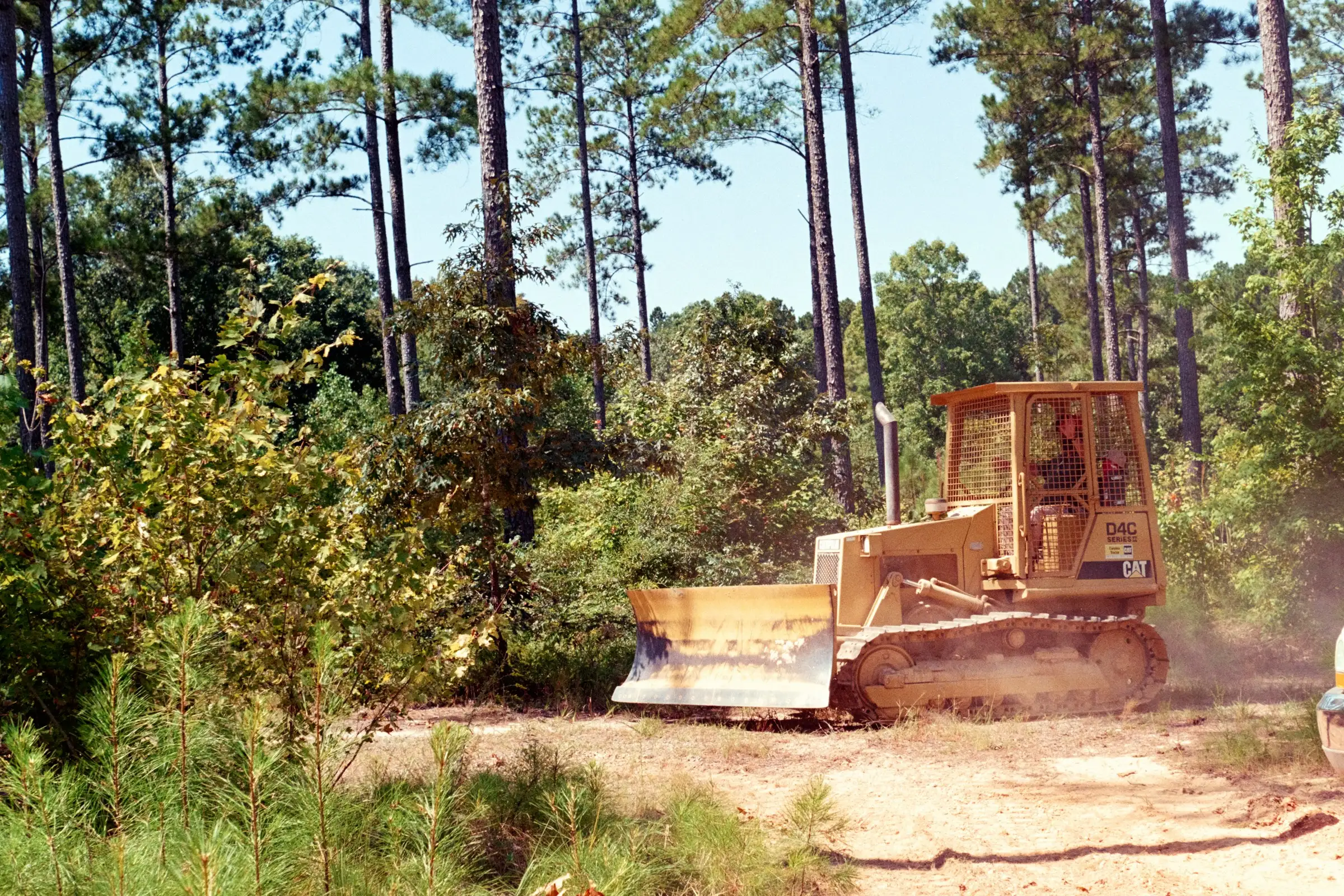
The honest answer is that land clearing in Georgia runs anywhere from about $500 to $10,000 an acre, and a range that wide is useless on its own. What makes it useful is knowing where in that range your particular piece of ground falls, and why.
That comes down to two questions: how much material is standing on the land, and where does that material go when it comes off. Everything else is detail.
The ranges, by what you are actually clearing
These are typical ranges for the CSRA and middle Georgia. They assume reasonable access and no unusual complications.
| What is on the ground | Typical cost per acre |
|---|---|
| Light brush, tall grass, saplings (bush hogging) | $500 – $1,500 |
| Moderate underbrush and small trees, mulched in place | $1,200 – $3,000 |
| Dense woods, mulched in place | $2,500 – $5,000 |
| Full clearing with trees down, stumps grubbed, debris hauled off | $4,500 – $10,000+ |
| Selective clearing (keeping specified trees) | Add 20 – 40% |
The jump between the third and fourth rows is the one that catches people. Mulching dense woods and fully clearing dense woods sound like similar jobs. They are not. One grinds the material where it stands and leaves it on your ground. The other cuts it, pulls the stumps, loads it, and pays somebody to take it. That is a different machine count, a different day count, and a disposal bill on top.
The six things that actually move your number
1. Where the debris goes
This is the single biggest lever, and it is the one most people do not think about until the quote arrives.
Forestry mulching has no disposal cost at all. The material becomes a mulch layer on your own dirt. Nothing gets loaded, nothing gets hauled, nobody pays a tipping fee.
The moment debris has to leave your property, you are paying for trucks, fuel, driver hours, and disposal at the other end. On a heavily wooded acre that can be a five-figure line item by itself. Burning is cheaper where it is allowed, but in Georgia it needs a burn permit from the Georgia Forestry Commission, and permits get suspended during dry spells and are restricted outright in some months near the metro counties. You cannot build a schedule around being allowed to burn.
2. Tree density and trunk diameter
Density is the obvious one. Diameter is the one that changes the machine.
A mulching head handles standing material up to roughly eight to ten inches comfortably. Past that, cutting slows down hard, and somewhere around twelve to fourteen inches the economics flip and you are better off with a dozer or an excavator with a thumb. If your tract is mostly mature hardwood, mulching may not be the cheap option it is on a pine thicket, and a quote that assumes mulching will not survive contact with the site.
3. Stumps: ground or grubbed
Leaving stumps in the ground is dramatically cheaper than taking them out. Whether you can leave them depends entirely on what is going on top.
For pasture, a food plot, or a firebreak, grinding a few inches below grade is fine. For anything structural — a slab, a driveway, a footing, a pool — the stump and root ball come out, because a rotting root ball under concrete becomes a void, and a void becomes a settled slab in three to five years. That is not a cost you can defer; it is a cost you either pay now or pay more of later.
4. Slope and access
A machine has to get there. If the only way in is a gate the width of a pickup, or a soft bottom that will not carry a lowboy, somebody is building an access route before any clearing happens.
Slope costs money for a different reason: on grade, machines work slower and more carefully, and on Georgia red clay a slope that has just been stripped of vegetation is an erosion problem the same afternoon it rains. That usually means silt fence, and sometimes a temporary sediment basin, which brings us to the next one.
5. Erosion control and permitting
Georgia’s Erosion and Sedimentation Act requires a Land Disturbance Activity permit for most projects disturbing one acre or more, and the state maintains a 25-foot undisturbed vegetative buffer along state waters (50 feet along designated trout streams). Local governments in the CSRA administer this, and requirements differ between Richmond, Columbia, and Aiken counties.
Where a permit applies, budget for silt fence, construction exits, and inspections. It is rarely the biggest number on the quote, but it is a real one, and a clearing contractor who does not mention it at all on a five-acre job is telling you something about how they work. There is more detail in the permit guide.
6. Total acreage
Bigger jobs cost less per acre. Mobilization — getting equipment to the site and back — is close to a fixed cost, so it hurts a half-acre job far more than a ten-acre one.
A quarter-acre residential lot clearing will almost always price above the per-acre ranges above, because you are paying to move the machines regardless. This is also why clearing five acres at once beats clearing one acre a year for five years, by a wide margin.
What CSRA ground does to the price
Two local realities show up on nearly every quote around Augusta.
Red clay. Columbia and Richmond County clay sheds water instead of absorbing it. Clear the vegetation off a slope and the next hard rain moves soil into the nearest ditch. That is why grading and drainage so often follow clearing here rather than being a separate project later — and why clearing quotes in the CSRA include erosion control more often than quotes in sandier parts of the state.
What is growing. This is loblolly and slash pine country, and pine mulches fast and grinds easily. Mixed in with it is sweetgum, which resprouts aggressively from the root system after cutting, and water oak, whose wide shallow root flare makes stump work a bigger job than the trunk diameter suggests. A tract of pine thicket and a tract of mature mixed hardwood are genuinely different jobs at the same acreage.
Costs that show up after the quote
- Haul-off and tipping fees, if debris leaves the site. Priced by load and by distance.
- Erosion control, on permitted jobs.
- Grading and seeding, if you want the ground usable rather than just cleared.
- Utility locates. Georgia 811 is free and legally required, but it only covers public utilities. Your irrigation line, invisible fence, and the water line somebody ran to the shop in 1985 are yours to flag.
- Access work, where equipment cannot reach the work area.
- Rock. Uncommon in the CSRA, but where it turns up it changes the plan.
How to get a quote that holds
The number gets accurate when the contractor knows four things: the address, the rough acreage, what is standing on it, and what you want the ground to do afterward. That last one is what most people leave out, and it is the one that decides whether stumps get ground or grubbed — which is often the difference between two quotes that look inexplicably far apart.
Two quotes on the same tract can differ by thousands simply because one assumed mulch-in-place and the other assumed haul-off. When you compare bids, check that they are pricing the same job before you compare the numbers.
Tell us the address, the acreage, and what is going on that ground afterward, and you get a real range on the call.