Rules
Land Clearing Permits in Augusta and the CSRA
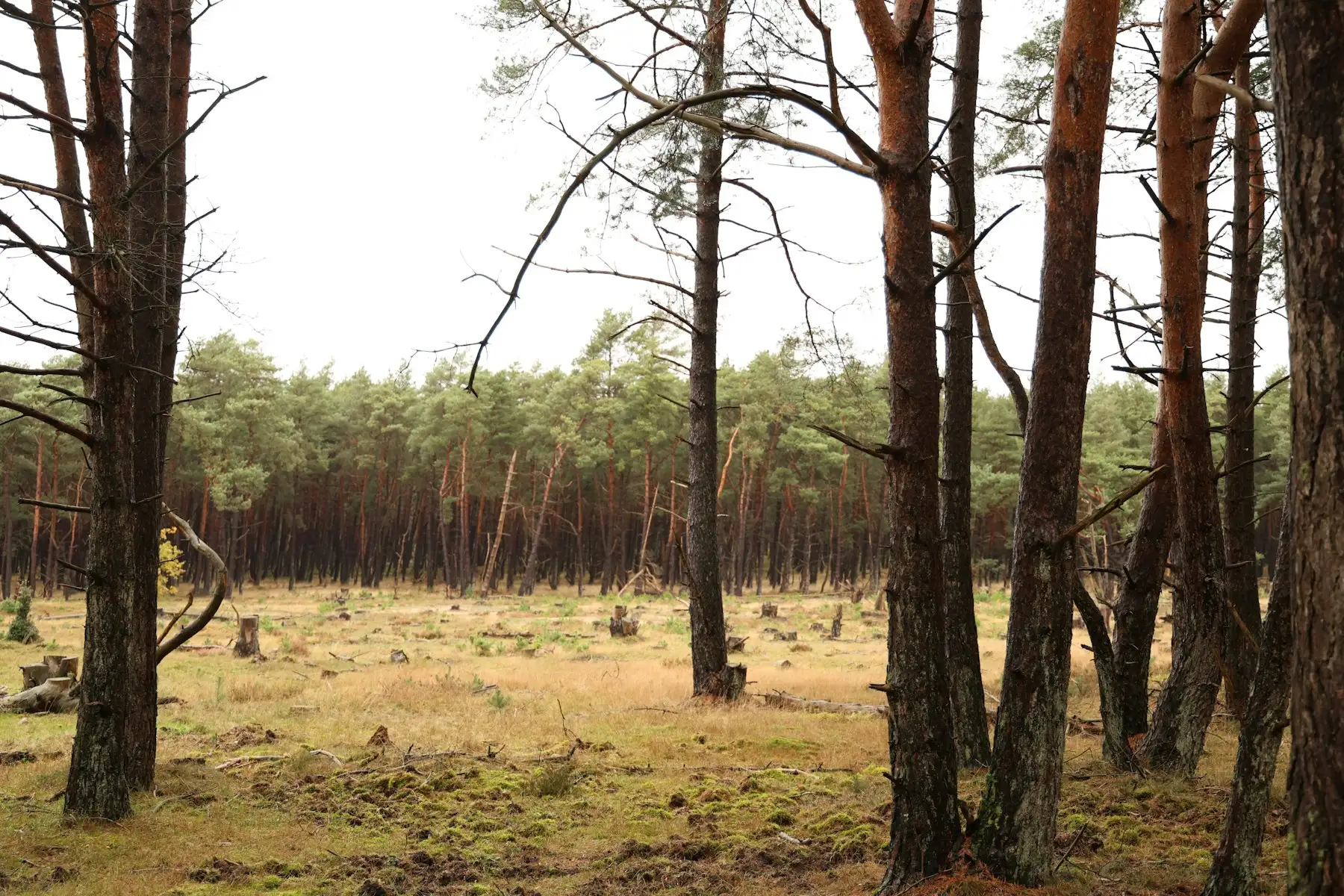
Clearing land in Georgia is not a free-for-all, and it is not a bureaucratic wall either. For most small residential jobs, there is nothing to file. Past a certain size, or near water, there is.
Here is how to work out which side of that line your project sits on.
This is a plain-language overview, not legal advice. Requirements differ between Richmond, Columbia, and Aiken counties, and they change. Confirm with your local authority before you start — it is a phone call, and it is a lot cheaper than a stop-work order.
The one-acre rule
The central rule in Georgia comes from the Erosion and Sedimentation Act. In broad terms, a project that disturbs one acre or more requires a Land Disturbance Activity permit, usually issued by the local government rather than the state.
Two things about that threshold catch people out:
It measures disturbance, not your parcel. Owning ten acres and clearing a half-acre garden spot is a half-acre of disturbance. Owning one acre and clearing all of it is an acre.
It is cumulative across a common plan. Clearing a half-acre now and another half-acre in three months as part of the same overall project is generally treated as one acre, not two separate small jobs. Splitting a project into phases to stay under the line is a well-known approach and it is not one that works.
Below an acre, state-level permitting typically does not apply — but local rules still can, and that is the part people skip.
Local rules that apply under an acre
Your county or city can be stricter than the state, and in the CSRA they often are. Things worth checking before any clearing:
- Tree ordinances. Some jurisdictions regulate removal of protected or specimen trees, and some require replacement plantings. This tends to bite on established residential lots more than on raw acreage.
- Buffers and setbacks along property lines, roads, and water.
- Floodplain rules, if any part of the property sits in a mapped flood zone.
- Wetlands. These are federal, and they do not care about your acreage.
- Subdivision or HOA covenants. Not law, but enforceable against you all the same.
- Steep slope provisions, where clearing on grade triggers extra erosion control.
The efficient move is one call to the county planning or development office with your parcel number and what you intend to do. They will tell you what applies. Doing that before equipment is scheduled is the whole trick.
Stream buffers
Georgia requires a 25-foot undisturbed vegetative buffer along state waters, measured from the point where vegetation has been wrested by normal streamflow. Along designated trout streams the buffer is 50 feet.
This applies to creeks, streams, and ponds — and “state waters” is a broader category than most landowners assume. A drainage feature that runs seasonally may still count.
Clearing inside a buffer requires a variance, which is a separate process with its own timeline. This is one of the most commonly violated rules in land clearing, usually by accident, because the buffer is invisible until somebody measures it. If there is any water on or beside your tract, establish where the buffer line falls before the first machine moves.
Wetlands
Wetlands are regulated federally under the Clean Water Act, administered by the U.S. Army Corps of Engineers. If wetlands are present, you may need a Section 404 permit regardless of how many acres you are disturbing and regardless of what the county says.
Wetlands are not always obvious. Ground that is dry in August can be a jurisdictional wetland. Signals worth taking seriously: land that stays soggy after rain, water-loving species like willow or cypress, and areas mapped on the National Wetlands Inventory. If any of that describes your tract, get a delineation before clearing. Corps enforcement in this area is not lenient, and restoration orders cost far more than the survey would have.
Erosion control on permitted jobs
Where a land disturbance permit applies, you are also committing to a sediment control plan. In practice, on a typical CSRA site, that means:
- Silt fence downslope of the disturbed area
- A stabilized construction exit so trucks do not track mud onto the road
- Inlet protection where storm drains are in play
- Temporary seeding or mulch on areas left bare
- Periodic inspection, often with documentation
None of this is exotic, and it is a modest line item relative to the clearing itself. But it is real work, and a quote that omits it on a permitted job is not a complete quote. That is worth knowing when you compare bids that look far apart.
Red clay makes this matter more here than in sandier regions. Clay sheds water rather than absorbing it, so a freshly cleared slope moves soil into the nearest ditch during the first real rain. Which is also why grading and drainage tend to follow clearing in the CSRA rather than being deferred.
Burn permits
If your clearing plan involves burning debris, you need a burn permit from the Georgia Forestry Commission. They are free and generally straightforward to obtain.
The catch is that they are conditional. Permits are suspended during dry or windy conditions, and burning is restricted seasonally in some counties. So a permit is permission to burn when conditions allow — not a guarantee you can burn on the day your contractor has the pile ready.
This is a genuine scheduling risk, and it is the reason forestry mulching is often the more predictable choice on a tight timeline: mulched material stays on site as a chip layer, so there is nothing to burn and nothing to wait for.
Call 811 before anything moves
Separate from permitting, and not optional: Georgia 811 must be called before digging. It is free, it is required by law, and the locate is normally completed within a few business days.
Understand what it covers. Georgia 811 marks public utilities — gas, electric, water mains, telecom. It does not mark anything private on your side of the meter. That means your irrigation, your invisible fence, the line to the barn, and the septic field are all yours to identify.
On older Augusta properties, private lines are frequently undocumented and rarely where anyone expects. Tell your contractor what you know about, and expect care around what nobody does.
A short pre-clearing checklist
- Measure your disturbance area. One acre is the threshold that changes things.
- Call the county with your parcel number and describe the work.
- Look for water. Creek, pond, or wet ground means buffers or a wetland delineation.
- Check the deed and covenants for easements and HOA restrictions.
- Call Georgia 811, and separately flag private lines yourself.
- Get a burn permit if burning is the disposal plan — and have a fallback.
- Confirm your contractor’s plan for erosion control on permitted work.
Most residential jobs clear this list in a couple of phone calls. Larger tracts, anything near water, and anything in a floodplain deserve more care up front.
The short version
Under an acre, away from water, no protected trees: usually nothing to file, though it is still worth one call to confirm.
An acre or more, or anywhere near a creek or wetland: assume permitting applies and build the timeline around it. Permits take time, and the cost of finding this out afterwards is measured in stop-work orders and restoration, not paperwork.
Tell us the address and roughly what you are trying to do, and we can tell you what usually applies to a tract like yours — and what needs a call to the county before anyone schedules a machine.