Methods
What Happens to the Trees After Land Clearing
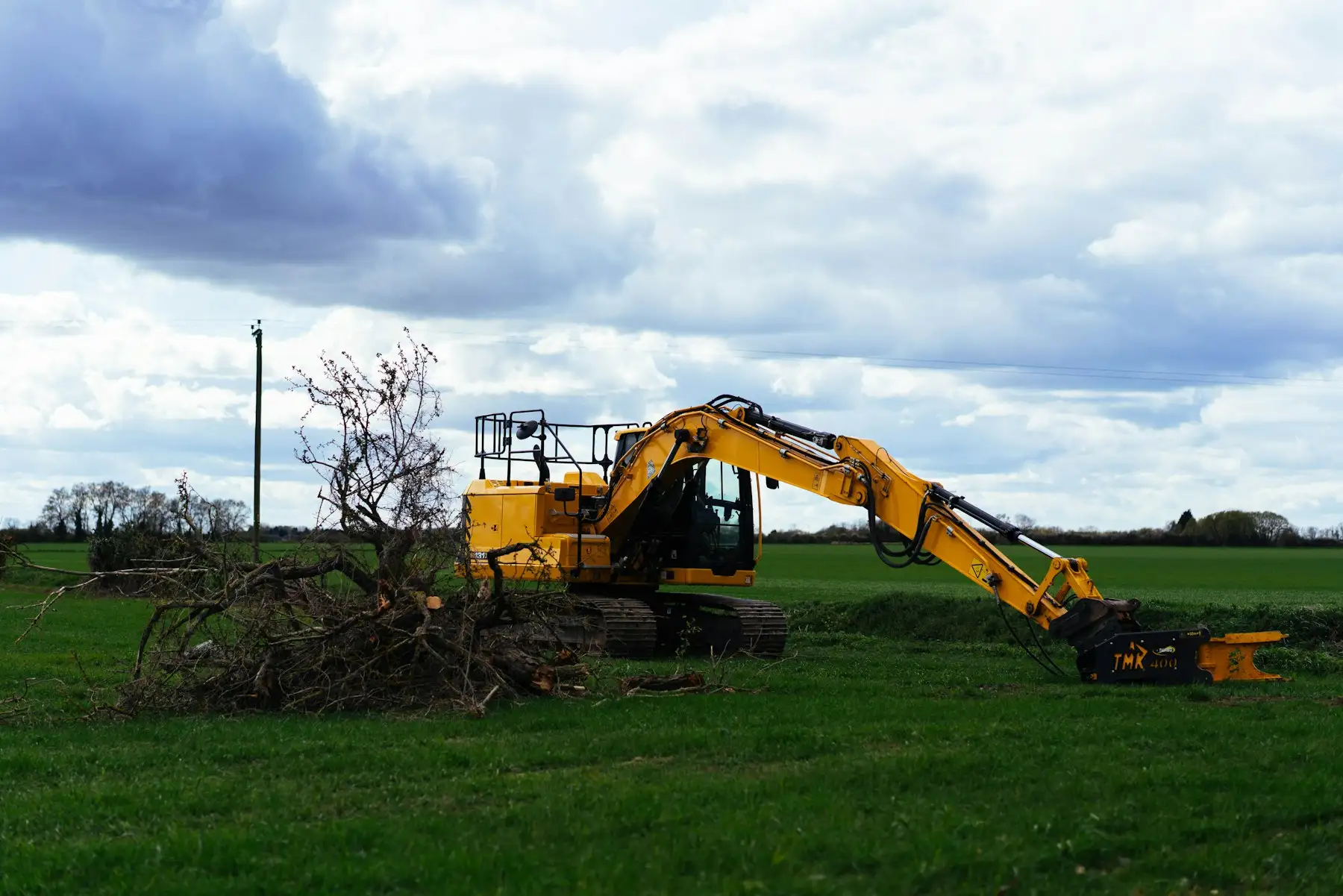
An acre of Georgia woods is a lot of material. Where it goes is frequently the biggest number on the quote — bigger than the cutting itself on a heavily wooded tract.
There are five realistic answers, and they are not interchangeable.
1. Mulch it in place
A forestry mulching head grinds standing material into chips that stay on your ground as a mulch layer.
Cost: lowest. No hauling, no tipping fees, no burn permit.
Good for: pasture reclamation, trails, firebreaks, hunting lanes, selective clearing, anything on a slope, and any job where nothing structural is going on the ground.
The catches: stumps stay in the ground, so you cannot build on it. A thick chip layer is a poor seedbed and ties up nitrogen while it breaks down, so it needs managing if you want grass this season. And it only works on material the head can handle — roughly under twelve inches.
2. Burn it
Pile and burn on site.
Cost: low, if it works.
The catches: you need a permit from the Georgia Forestry Commission, and permits are conditional. They get suspended when it is dry or windy, and a seasonal open burning ban runs May 1 to September 30 in a large number of Georgia counties — confirm whether yours is one before planning around it.
Burning also takes days of tending, leaves ash and a scarred burn scar that grows poorly for a while, and makes you the neighbor with the smoke. Any schedule that depends on being allowed to burn is a fragile schedule.
3. Haul it off
Load into trucks and take it to a disposal or recycling facility.
Cost: highest. Trucking plus tipping fees, both scaling with distance and volume. On a wooded acre this alone can be a four-figure line, sometimes five.
Good for: building sites where the ground has to be clean and level, urban and suburban lots with no room to work, and any job where mulch on the ground is unacceptable.
Worth asking: where it actually goes. Much of it is chipped for biomass or mulch rather than landfilled, and facilities differ in what they accept and charge.
4. Chip the brush, handle wood separately
A hybrid. Small material goes through a chipper; larger trunks are cut to length and dealt with on their own.
Cost: middle.
Good for: residential jobs with a mix of brush and a few real trees. Chips can stay as mulch or leave in a smaller number of loads, and trunks can become firewood, be milled, or be sold if they are worth anything.
5. Sell the timber
If the tract has enough merchantable pine or hardwood, a timber sale can offset clearing costs — occasionally cover them.
Cost: potentially negative, in your favor.
Reality check: this needs volume. A few yard trees are not a timber sale. Loggers want enough standing volume to justify moving equipment, plus access a log truck can use. On a small suburban lot the answer is almost always no. On ten-plus acres of mature pine it is genuinely worth a call to a forester before anyone clears anything.
Important: a timber harvest is not land clearing. Loggers take merchantable trunks and leave tops, limbs, and stumps. You will still need clearing afterward — but on cleared-of-timber ground, and with money in hand.
Straight comparison
| Option | Relative cost | Stumps out? | Build-ready? | Main constraint |
|---|---|---|---|---|
| Mulch in place | Lowest | No | No | Size limit; chip layer |
| Burn | Low | No | No | Permits and conditions |
| Haul off | Highest | Usually | Yes | Trucking and tipping |
| Chip and separate | Middle | No | No | Sorting labor |
| Sell timber | Can pay you | No | No | Needs real volume |
Picking, in one question
Same question as everything else in clearing: what is going on this ground afterward?
Building a house, shop, or driveway → material leaves and stumps come out. Budget for haul-off. See site preparation.
Pasture, trails, firebreak, or just usable land → mulch in place, almost every time. It is dramatically cheaper and the erosion control is free.
Ten-plus acres of mature timber → call a forester before you call anyone else.
Small lot, mixed material → chip and separate is usually the practical middle.
There is a fuller cost breakdown in the per-acre pricing guide.
Two things worth knowing
Chips are not backfill. Grindings dumped into a stump hole look level on day one, then break down and settle into a dish. Fine under a lawn you will topdress. Not fine under anything that has to stay level.
Compare bids on the same disposal method. Two quotes on identical acreage can differ by thousands purely because one assumed mulch-in-place and the other assumed haul-off. If two numbers look inexplicably far apart, this is usually why.
Tell us the address, the acreage, roughly what is standing, and what the ground is for. That is enough to say which disposal route fits and what it runs.